
You’ve probably felt those 54‑minute typing marathons where your wrists scream, and your posture slumps like a wilted plant. All right, imagine a split‑frame that lets each hand rest naturally, a scooped key cup that cradles your fingertips, and a memory‑foam wrist rest that actually eases strain. Here’s the thing: if you’re ready to ditch fatigue and keep your desk tidy, these seven keyboards each solve a specific pain point—just pick the one that matches your workflow, and you’ll notice the difference instantly.
| ProtoArc EK01 Plus Backlit Bluetooth Keyboard with Wrist Rest |  | Ergonomic Pro | Connectivity: Dual Bluetooth & 2.4 G USB receiver | Wrist Support: Cushioned wrist rest | Ergonomic Layout: Curved split‑frame, scooped keys | VIEW LATEST PRICE | Read Our Analysis |
| ProtoArc EK01 Plus Backlit Ergonomic Keyboard |  | Premium Comfort | Connectivity: Dual Bluetooth & 2.4 G USB receiver | Wrist Support: Cushioned wrist rest | Ergonomic Layout: Curved split‑frame, scooped keys | VIEW LATEST PRICE | Read Our Analysis |
| Arteck Ergonomic USB Keyboard with Wrist Rest and Backlit Colors |  | Colorful Choice | Connectivity: Wired USB (1.8 m cable) | Wrist Support: Cushioned wrist & palm rest | Ergonomic Layout: Split keyboard, ambidextrous orientation | VIEW LATEST PRICE | Read Our Analysis |
| Logitech Wave Keys Wireless Ergonomic Keyboard – Rose |  | Eco-Friendly Elegance | Connectivity: Bluetooth & Logi Bolt USB receiver | Wrist Support: Cushioned memory‑foam palm rest | Ergonomic Layout: Wave‑shaped split, ambidextrous | VIEW LATEST PRICE | Read Our Analysis |
| Logitech Wave Keys & Lift Mouse Combo Graphite | 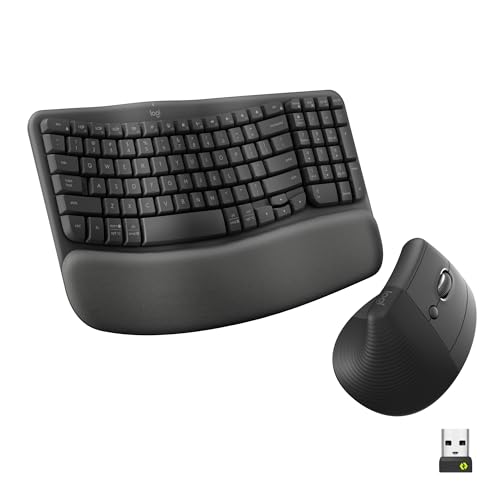 | Combo Power | Connectivity: Bluetooth Low Energy & Logi Bolt USB receiver | Wrist Support: Cushioned memory‑foam palm rest | Ergonomic Layout: Wave‑shaped split, ambidextrous | VIEW LATEST PRICE | Read Our Analysis |
| Logitech Ergo K860 Wireless Ergonomic Keyboard (Black) |  | Posture Perfect | Connectivity: Bluetooth & USB receiver | Wrist Support: Memory‑foam wrist rest | Ergonomic Layout: Curved split‑frame, scooped keys | VIEW LATEST PRICE | Read Our Analysis |
| Incase Ergonomic Keyboard with Shortcuts and Palm Rest |  | Productivity Boost | Connectivity: Wired USB‑A | Wrist Support: Cushioned fabric palm rest | Ergonomic Layout: Split keyset, ambidextrous | VIEW LATEST PRICE | Read Our Analysis |
More Details on Our Top Picks
ProtoArc EK01 Plus Backlit Bluetooth Keyboard with Wrist Rest
If you’re battling wrist pain from long typing sessions, the ProtoArc EK01 Plus is an ergonomic pro that actually eases that strain. Its curved split‑frame spreads your hands naturally, and the scooped keys hug your fingertips, so you feel less fatigue. The cushioned wrist rest gives 54 % more support than typical pads, and four tilt feet let you dial in three angles for perfect posture.
All right, connectivity won’t hold you back. You can pair via Bluetooth to three devices or use the 2.4 GHz dongle—just remember the dongle won’t work with Mac/iOS, so stick to Bluetooth there. The 2000 mAh battery lasts up to 34 hours on low backlight, and without lighting it stretches to three months, sleeping after an hour of idle time.
Here’s the thing about lighting: soft white LEDs offer three brightness levels, and they shut off after a minute of inactivity, saving power. The F1‑F12 keys act as media controls by default, but you can hit Esc + Fn to restore standard functions. It’s a full‑size 117‑key QWERTY layout, not programmable, which may bother power‑users but keeps things simple for most.
Now, consider the trade‑offs. The split design needs a 1–2 week adaptation period, and the full‑size layout occupies more desk space, so measure your workspace first. Charge via USB‑C or a 5 V 1 A charger—avoid fast chargers to protect battery health. A keyboard cover will keep dust and spills at bay.
Obviously, if you want a keyboard that reduces wrist strain, offers versatile connectivity, and lasts long without constant charging, this one fits you. Grab it, give it a week, and you’ll see why it’s a smart, comfortable choice.
- Connectivity:Dual Bluetooth & 2.4 G USB receiver
- Wrist Support:Cushioned wrist rest
- Ergonomic Layout:Curved split‑frame, scooped keys
- Backlighting:Soft white LED, 3 brightness levels
- Power Source:2000 mAh rechargeable battery
- Key Count / Layout:117 keys, QWERTY
- Additional Feature:2000 mAh battery
- Additional Feature:Dual Bluetooth/2.4 G
- Additional Feature:Adjustable tilt feet
ProtoArc EK01 Plus Backlit Ergonomic Keyboard
All right, you’ve been battling wrist fatigue and cramped posture, and the ProtoArc EK01 Plus gives you premium comfort with its full‑size curved split‑keyframe. You’ll feel the scooped keys hug your fingertips, while the cushioned wrist rest adds 54 % more support. The four tilt feet let you dial in three angles, so you can keep your forearms relaxed.
Now, connectivity won’t be a hassle. You can pair up to three devices via Bluetooth or the 2.4 GHz USB dongle, and it works on Windows, macOS, Android, and many Amazon Fire tablets. The keyboard stays wireless‑only, so you won’t have a cable clutter.
Here’s the thing about lighting: soft white LEDs glow in three brightness levels, but they shut off after a minute of idle time and fully dim after an hour to save the 2000 mAh battery. Charge via a standard USB‑C port or a 5 V 1 A charger—skip fast chargers to avoid overheating.
Obviously, the mechanical scissor switches feel crisp, and the QWERTY layout with 117 keys covers all your needs. The F1‑F12 keys default to media controls, but you can hold Esc + Fn for traditional functions. You won’t program the keys, which may bother power users, but most people won’t miss it.
If you value ambidextrous ergonomics and don’t mind a wireless‑only setup, this one’s for you. The silicone wrist rest, plastic‑metal body, and two‑year warranty round out a solid package. Decide now, and you’ll type in comfort without second‑guessing.
- Connectivity:Dual Bluetooth & 2.4 G USB receiver
- Wrist Support:Cushioned wrist rest
- Ergonomic Layout:Curved split‑frame, scooped keys
- Backlighting:Soft white LED, 3 brightness levels
- Power Source:2000 mAh rechargeable battery
- Key Count / Layout:117 keys, QWERTY
- Additional Feature:Scissor‑switch mechanism
- Additional Feature:Ambidextrous layout
- Additional Feature:2‑year warranty
Arteck Ergonomic USB Keyboard with Wrist Rest and Backlit Colors
You’ve been battling sore wrists from long typing sessions, and the split‑design of the Arteck ergonomic keyboard finally gives your forearms a natural, relaxed angle. The soft cushioned wrist and palm rest cradles you while you type, and the ambidextrous layout works for any hand orientation.
All right, the seven LED backlight colors let you pick a vibe, and three brightness levels keep your eyes happy in any lighting. Low‑profile scissor‑switch keys stay quiet, so you won’t disturb coworkers.
Now, the USB‑C cable stretches a comfortable six feet, so you can place the keyboard wherever you need it without tugging. It plugs straight into Windows 10 and newer OSes, but it isn’t water‑resistant, so keep drinks away.
Here’s the thing: the plastic‑rubber‑silicone build feels sturdy yet light at 2.29 lb, and the 19 × 9.65 × 1.85‑inch footprint fits most desks. You get a welcome guide and a 24‑month warranty, which is solid peace of mind.
If you want a wired, backlit, ergonomic solution that eases wrist strain without breaking the bank, this one’s for you. Choose the black or gray style you like, plug it in, and let your typing comfort transform.
- Connectivity:Wired USB (1.8 m cable)
- Wrist Support:Cushioned wrist & palm rest
- Ergonomic Layout:Split keyboard, ambidextrous orientation
- Backlighting:7 color LED, 3 brightness levels
- Power Source:USB‑powered (corded)
- Key Count / Layout:104 keys, QWERTY
- Additional Feature:Seven backlight colors
- Additional Feature:Wired 1.8 m cable
- Additional Feature:Low‑profile keys
Logitech Wave Keys Wireless Ergonomic Keyboard – Rose
Your wrists probably ache after hours of typing on a flat slab, and you’re craving a keyboard that actually respects your natural hand posture. The Wave Keys‘ wavy silhouette cradles your hands, wrists, and forearms, so you’ll feel less strain. Its cushioned palm rest uses memory foam, giving a gentle lift that keeps tendons relaxed.
All right, you’ll love the wireless freedom—Bluetooth or Logi Bolt receiver lets you switch between laptop, tablet, and phone with Easy‑Switch. It works on Windows, macOS, iPadOS, ChromeOS, and Android, so you won’t need separate devices. The ambidextrous layout fits either hand, but the rose color may clash with ultra‑minimalist desks.
Now, the battery lasts up to three years on a single lithium‑polymer cell, which means you won’t chase chargers. The keyboard weighs just 0.5 kg, and many plastic parts are post‑consumer recycled, so you get a lighter, greener setup.
Here’s the thing: if you need a compact, ergonomic, wireless QWERTY keyboard for office use, this one’s for you. The built‑in media mouse antenna and Logi Options+ shortcuts add convenience, but the membrane feel isn’t as crisp as mechanical keys.
Obviously, the one‑year limited hardware warranty backs you up, and Amazon’s 30‑day return lets you test it risk‑free. If you value comfort, portability, and a dash of style, go ahead and make this Wave Keys your new typing companion.
- Connectivity:Bluetooth & Logi Bolt USB receiver
- Wrist Support:Cushioned memory‑foam palm rest
- Ergonomic Layout:Wave‑shaped split, ambidextrous
- Backlighting:No backlighting
- Power Source:Replaceable Li‑Polymer battery (3‑year life)
- Key Count / Layout:99 keys, QWERTY
- Additional Feature:Memory‑foam palm rest
- Additional Feature:3‑year battery life
- Additional Feature:Recycled‑plastic construction
Logitech Wave Keys & Lift Mouse Combo Graphite
If you spend hours typing and scrolling, wrist fatigue probably feels like a constant companion. The Wave Keys’ wavy layout lets your hands rest naturally, while the memory‑foam palm rest cushions your wrists. The Lift mouse stands upright at 57°, easing pressure on your forearm and keeping your thumb snug on its textured grip.
All right, here’s the thing: the combo runs on Bluetooth Low Energy and a Logi Bolt receiver, so you stay wireless without lag, and it works on Windows, macOS, iPadOS, ChromeOS, and Linux. You’ll need two AAA batteries for the keyboard and one AA for the mouse—both included—so you won’t scramble for spares.
Obviously, the tactile plunger switches give quiet, satisfying clicks, and the SmartWheel adapts scrolling speed on the fly. Six mouse buttons let you map shortcuts in Logi Options+, but if you’re left‑handed, the right‑hand orientation might feel limiting.
Now, if you value sustainable design, the plastic is 61% recycled in the keyboard and 70% in the mouse, and the whole set weighs just 1.65 lb—easy to move between desks. This combo is for you if you want a cohesive, ergonomic workstation that feels premium without breaking the bank.
Give it a try; the 2‑year warranty backs you up, and you’ll notice less strain after a few days of use. Choosing the Wave Keys & Lift means you’re investing in comfort that actually works for you.
- Connectivity:Bluetooth Low Energy & Logi Bolt USB receiver
- Wrist Support:Cushioned memory‑foam palm rest
- Ergonomic Layout:Wave‑shaped split, ambidextrous
- Backlighting:No backlighting
- Power Source:2 AAA batteries (keyboard) + 1 AA (mouse)
- Key Count / Layout:99 keys, QWERTY
- Additional Feature:Vertical “Lift” mouse
- Additional Feature:SmartWheel scrolling
- Additional Feature:2‑year hardware warranty
Logitech Ergo K860 Wireless Ergonomic Keyboard (Black)
All right, you’ve been battling cramped wrists and slouchy shoulders for months, and the Logitech Ergo K860 is the posture‑perfect fix you’ve been hunting for. Its curved split keyframe and sloping design cut wrist bending by about 25%, while the memory‑foam wrist rest adds 54% more support than a flat pad. You’ll feel the difference instantly, especially if you spend long hours typing or switch between sitting and standing.
Now, the 78‑key full‑size layout keeps the numpad you love, and the scooped Perfect Stroke keys match your fingertip shape for fluid, quiet typing. The CAPS LOCK light and stain‑resistant fabric on the wrist rest are small touches that make daily use smoother.
Here’s the thing: Bluetooth or the USB receiver connects you to Windows, macOS, Linux, or Chrome OS, and you can pair up to three devices. Two AAA batteries last about two years, so you won’t chase chargers. Logitech Options lets you remap Fn keys and set shortcuts, plus it warns you when the battery dips.
Obviously, the trade‑off is the 40‑ounce weight and the need for a flat surface to keep the tilt legs stable. If you prefer ultra‑light travel keyboards, this isn’t for you. But if you want a sturdy, ergonomic workstation that respects your posture, the K860 fits the bill and feels like a smart, sustainable upgrade.
- Connectivity:Bluetooth & USB receiver
- Wrist Support:Memory‑foam wrist rest
- Ergonomic Layout:Curved split‑frame, scooped keys
- Backlighting:No backlighting
- Power Source:2 AAA Alkaline batteries
- Key Count / Layout:78 keys, QWERTY (full‑size with numpad)
- Additional Feature:Adjustable palm lift
- Additional Feature:Quiet Perfect Stroke keys
- Additional Feature:FSC‑certified packaging
Incase Ergonomic Keyboard with Shortcuts and Palm Rest
The split‑keyset and cushioned palm rest cut wrist fatigue, so you’ll feel a real productivity boost during marathon typing sessions. You’ve probably tried cramped keyboards that leave your hands sore after a few hours, and you know the difference a natural wrist angle makes. This Incase model gives you that split‑keyset, a fabric‑covered palm rest, and a full 104‑key layout, so you can type comfortably while still having every key you need.
Now, the shortcuts are the real kicker. You’ll find dedicated function keys for Microsoft 365, emojis, search, and media controls, which means you can launch apps or insert symbols without hunting through menus. It’s wired USB‑A, so you won’t worry about lag or battery drain, but you’ll need a Windows 10‑or‑later machine. The plastic enclosure feels sturdy, and the black finish blends into any desk.
Here’s the thing: the membrane switches feel softer than mechanical ones, which some people love for quiet typing, but they lack the crisp click some typists crave. If you value a whisper‑quiet workspace and don’t need that tactile snap, this keyboard fits perfectly. It also includes a number pad, so data entry stays fast and painless.
Obviously, the 1‑year limited warranty backs you up, and the dimensions (19.2 × 10.3 × 2.39 in) keep it compact enough for tight setups. If you’re looking for an ergonomic split‑keyboard with handy shortcuts and a comfy palm rest, and one’s for you. Go ahead and plug it in—your wrists will thank you.
- Connectivity:Wired USB‑A
- Wrist Support:Cushioned fabric palm rest
- Ergonomic Layout:Split keyset, ambidextrous
- Backlighting:No backlighting
- Power Source:No battery (wired)
- Key Count / Layout:104 keys, QWERTY with numpad
- Additional Feature:Dedicated Microsoft 365 keys
- Additional Feature:Integrated number pad
- Additional Feature:Premium fabric palm rest
Factors to Consider When Choosing an Ergonomic Keyboard
You’re probably annoyed by cramped hands and wrist strain, so let’s sort out what really matters. Split‑keyframes can free your shoulders, but they demand a learning curve; wrist‑rest support ranges from thin pads to full‑length cushions, and your choice hinges on how much you type versus how much you game. Now, pick a tilt that matches your posture, decide between wired or Bluetooth based on desk clutter, and you’ll have a setup that feels custom‑made—this one’s for you if you want comfort without sacrificing speed.
Ergonomic Design Basics
When your wrists ache after a marathon of emails, a split or curved keyframe can instantly cut the strain by letting your hands sit at a natural, shoulder‑width angle. You’ll notice the difference right away—your forearms stay relaxed, and the pain fades.
All right, now look at the key shape. Scooped or contoured keys hug your fingertips, giving you smoother, more precise strokes without the “flat‑plate” fatigue. If you type a lot of numbers, a full‑size layout with an integrated numpad keeps everything in reach, but it adds width, so you might need a larger desk.
Here’s the thing: adjustable tilt feet let you set the keyboard at 0°, ‑4°, or ‑7°, aligning your wrists with your elbows whether you sit or stand. A cushioned palm rest lifts your hands, cutting wrist bend by up to 25 %.
Obviously, an ambidextrous orientation works for left‑handers and those who switch hands often; otherwise, a single‑handed split might feel overkill.
If you crave comfort and can accommodate a slightly bigger footprint, this design is for you. Choose the model that matches your desk space and typing habits, and you’ll feel the relief instantly.
Split‑Keyframe Benefits
A split‑keyframe instantly eases wrist ache by letting your hands sit shoulder‑width apart, so forearms stay relaxed instead of hunched. You’ll feel the strain melt away because the keys line up with each hand’s natural inward angle, keeping posture upright and muscles loose. The curved separation encourages a neutral forearm position, which can lower the chance of repetitive‑strain injuries over time.
Now, the adjustable tilt feet let you fine‑tune the typing angle, so you can find that sweet spot where comfort meets speed. You’ll notice less ulnar deviation as the two distinct key groups keep wrists straighter, which is a game‑changer for long sessions. This design isn’t a one‑size‑fits‑all; if you prefer a flat board, the curve might feel odd at first, but most users adapt quickly.
All right, if you’re battling cramped wrists and want a keyboard that adapts to your natural stance, a split‑keyframe is the clear win. It’s for you if you value posture, want to reduce muscle fatigue, and don’t mind a little setup tweaking. Go ahead—choose the split, and type with confidence.
Wrist‑Rest Support Levels
If your wrists feel like they’re about to file a grievance, the wrist‑rest you pick can make or break the day. You’ll notice a cushioned rest can give up to 54 % more support than a bare board, slashing fatigue fast. Memory foam in a palm rest molds to your shape, keeping your wrists neutral and comfortable for hours.
All right, consider the rest’s size and placement; a larger pad may eat desk space, while a slim edge stays sleek but offers less surface area. Integrated sloped designs cut wrist extension by about 25 %, giving you built‑in posture help without extra accessories.
Now, the trade‑off: adjustable tilt feet change typing angles, which also shifts wrist support. If you love tweaking angles, you’ll appreciate the flexibility, but you might end up with a steeper incline than you need. This one’s for you if you want a solid, ergonomic foundation without extra gadgets. Choose the style that matches your desk layout and typing habits, and you’ll feel the difference instantly.
Adjustable Tilt Mechanisms
All right, you’ve probably noticed how a flat keyboard forces your wrists into a painful bend after a few hours of typing. Adjustable tilt mechanisms solve that by letting you set the angle to 0, ‑4, or ‑7 degrees, so your forearms line up naturally. The sloping design can cut wrist bending by up to 25 % compared to a standard flat board, which means less strain during marathon sessions.
Now, the trade‑off is that some desks don’t have enough clearance for the highest tilt, so you might need a thinner foot or a different desk height. If you switch between sitting and standing, the middle setting gives a balanced posture, while the deepest tilt favors a relaxed, seated vibe. Obviously, the more angles you get, the more moving parts there are, which can mean a slightly louder click when you adjust.
Here’s the thing: if you love a clean desk and rarely change positions, the basic 0‑degree option might be enough. But if you’re prone to wrist fatigue and want to fine‑tune your ergonomics, a keyboard with three distinct tilt legs is your best bet. Pick the one that matches your work style, set the angle, and feel the difference instantly.
Connectivity Options Overview
Now you’re staring at the spec sheet, wondering whether Bluetooth, a 2.4 GHz dongle, or a wired USB cable will keep your workflow smooth. Bluetooth lets you hop between laptop, tablet, and phone without unplugging, but you might notice a tiny lag if you’re a competitive typist. A dedicated 2.4 GHz receiver gives rock‑solid, lag‑free performance, yet it occupies a USB port and can clash with other dongles.
All right, if you hate battery anxiety, go wired. A USB cable powers the keyboard forever and sidesteps pairing headaches, but you’ll be tethered to a desk. Some models sleep after minutes of inactivity, cutting power draw and turning off backlighting, which is great for battery‑run‑aways.
Now, check OS compatibility. 2.4 GHz radios sometimes refuse to work on older macOS or Linux builds, so verify the driver list before you buy. If you travel a lot, a rechargeable battery that lasts weeks is a lifesaver; disposable cells last years but demand constant swaps. Choose the method that matches your mobility, desk setup, and patience level—then you’ll type without second‑guessing the connection.
Backlighting Power Impact
Bluetooth and dongles get you connected, but once you’re typing, the backlight decides whether your battery lasts a day or a month. You’ll notice that high brightness drains the mAh pool fast, shaving hours off your workday. If you can tolerate a dim glow, you’ll stretch those hours into days, and turning the light off altogether can keep the keyboard alive for weeks or even months.
All right, here’s the thing: many ergonomic keyboards include an automatic timeout that switches off after a few minutes of inactivity, saving juice without you thinking. You’ll love that feature if you step away often; otherwise, you might prefer a manual control to keep the light on exactly when you need it.
Now, charging matters too. Plugging into a low‑amperage USB port or a modest charger protects the battery; fast chargers can stress the internal cells and shorten overall life. If you’re a night‑owl who plugs in at the desk, stick with the gentle charger. This one’s for you if you want reliable power without juggling chargers. Choose a backlight level that matches your environment, enable timeout, and you’ll enjoy long sessions without hunting for a fresh charge.
Key Switch Types
Key switch type decides whether you’ll hear a click, feel a bump, or type silently, and it shapes how your hand muscles fatigue over hours. You’re probably tired of noisy keyboards that make your coworkers wince, or of mushy keys that leave your fingers sore. The truth is, mechanical options—like scissor‑style low‑profile switches—give you tactile feedback without a loud clack, while membrane domes keep the sound down and the feel soft. If you crave a discreet click, plunger switches in wireless models deliver a tactile bump without rattling the desk. Obviously, each type locks in a fixed actuation force, so you’ll feel the difference in key travel and fatigue. All right, choose mechanical if you want crisp feedback and can tolerate a bit of noise; go membrane for quiet, plush typing; pick plunger for a middle ground in wireless setups. This one’s for you if you value consistency over programmability. Now, decide which feel matches your workflow and you’ll type longer, happier, and without second‑guessing.
Device Compatibility Range
Choosing an ergonomic keyboard that actually works with all your gadgets feels like hunting for a needle in a haystack, especially when Bluetooth, 2.4 GHz dongles, and wired USB each have their own quirks. You need to verify that the connectivity method matches your OS—Windows, macOS, Android, or ChromeOS—because a 2.4 GHz receiver often drops on Mac/iOS. All right, check if the keyboard can pair with multiple devices simultaneously; that way you flip from PC to tablet to phone without re‑pairing each time. Now, make sure any companion app runs on your OS version, otherwise you’ll lose custom key‑maps or lighting. Obviously, a low battery can cripple a wireless link, so keep it charged or use a wired fallback. This one’s for you if you juggle several platforms and want seamless switching. Choose the method that fits your daily routine, and you’ll feel confident, not confused.